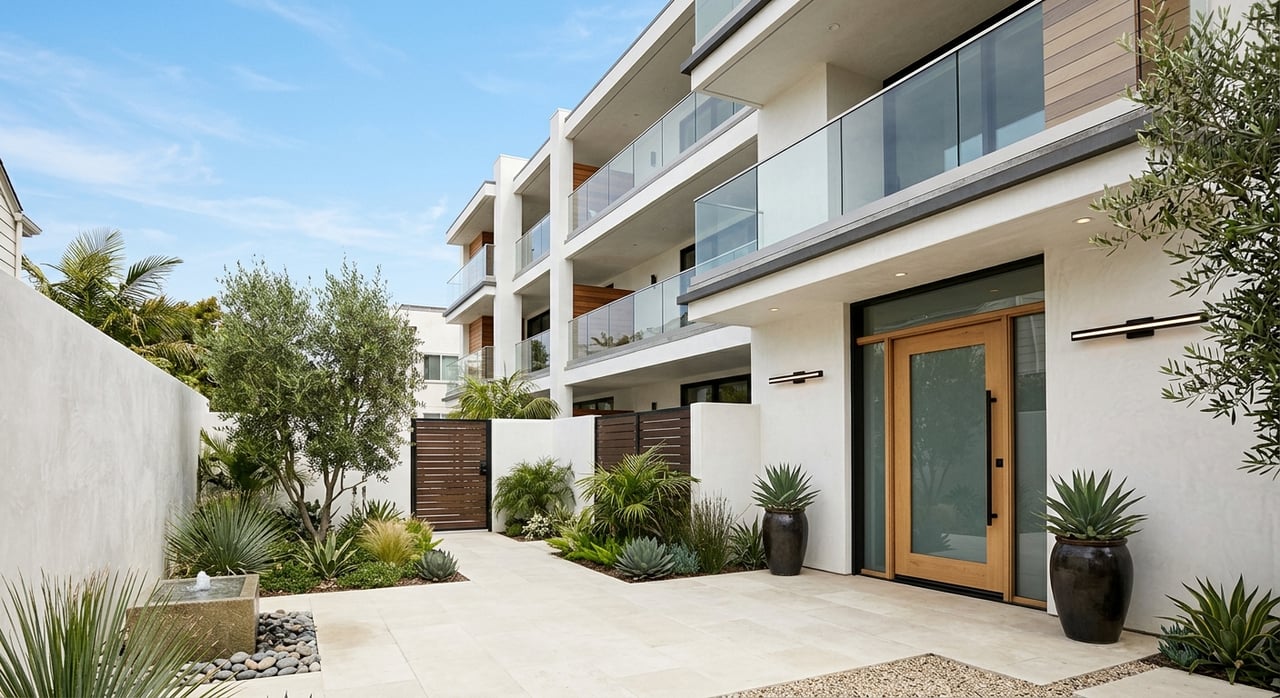
Are you looking for a coastal home you can enjoy without adding a long maintenance list to your life? In Pacific Beach, that goal is often very realistic, especially if you want a second home, a simplified primary residence, or a low-fuss luxury retreat near the water. With the right property and the right due diligence, you can find a home that gives you beach access, daily convenience, and less day-to-day upkeep. Let’s dive in.
Why Pacific Beach Fits Lock-And-Leave Living
Pacific Beach offers a rare mix of coastal energy and practical convenience. The community sits between La Jolla, Interstate 5, Mission Bay Park, Mission Beach, and the Pacific Ocean, and it is already about 97% developed according to the City of San Diego.
That matters because built-out neighborhoods often create a different kind of buying opportunity. Instead of large new-lot housing, Pacific Beach more often offers infill residences, condos, townhomes, and smaller-scale multifamily living that can suit a lock-and-leave lifestyle.
SANDAG’s 2022 data helps explain why. Pacific Beach has 22,326 housing units, including 13,735 multifamily units, 4,417 detached single-family homes, and 4,174 attached single-family homes. In simple terms, condos and townhomes are a major part of the neighborhood, not a side category.
What “Lock-And-Leave” Really Means
A true lock-and-leave property is not just a smaller home near the coast. It is a home with an ownership and maintenance structure that reduces your personal responsibility when you are away.
In California, many condos and townhomes are common interest developments. In that setup, you own your unit or lot and also have rights tied to common areas, while the homeowners association typically owns or maintains shared areas. Under Civil Code Section 4775, the association is generally responsible for common-area maintenance unless the governing documents say otherwise.
For you, that can mean less concern over exterior upkeep, shared landscaping, and certain building systems. That is often the heart of the lock-and-leave appeal.
Pacific Beach Property Types to Watch
Pacific Beach has a varied housing pattern, and different pockets tend to offer different building forms. That variety gives you options depending on how much privacy, convenience, and maintenance relief you want.
Condos Along Key Corridors
The community plan identifies higher-density areas along Sail Bay, Grand Avenue, Hornblend Street, Lamont Street, and Ingraham Street. In these areas, you are more likely to see four-plexes, four-unit condominiums, and larger multi-unit condo or apartment buildings.
For many buyers, these buildings can be a strong lock-and-leave match. They often align with HOA-managed exterior maintenance and may offer a more structured ownership experience than a standalone coastal house.
Townhomes and Attached Homes
Attached single-family homes make up a meaningful part of Pacific Beach housing stock. These homes can offer more separation and space than a traditional condo while still reducing some maintenance obligations through an HOA structure.
This can appeal to buyers who want a little more privacy or a more residential feel without taking on the full upkeep of a detached property. The exact maintenance split depends on the project’s governing documents, so review matters.
Beach-And-Bay Multifamily Options
Closer to the beach and bay, the community plan notes lower-intensity multifamily forms such as duplexes and two-on-ones. These may offer a smaller-building feel, which some buyers prefer.
Still, appearance alone does not tell you the ownership structure. The California Department of Real Estate notes that a property that looks like a house can still be legally structured as a condo or another common-interest form, so you should always review title structure and CC&Rs instead of relying on exterior style.
What Makes a Property Truly Low-Maintenance
Not every condo or townhome is equally easy to own from afar. A property becomes more truly lock-and-leave when the building, the documents, and the location all support that lifestyle.
Here are some of the most important traits to prioritize:
- HOA-managed exterior and common-area maintenance
- Clear responsibility for roofs, exterior walls, and shared systems
- Deeded or assigned parking that is easy to access
- Straightforward ingress and egress
- Building features that reduce ongoing upkeep
- Rules that fit how you plan to use the property
- Strong reserve planning and transparent HOA finances
If you are buying a second home or part-time residence, these details often matter just as much as square footage or finishes.
HOA Review Matters More Than the View
A polished building can still hide expensive issues. For lock-and-leave buyers in Pacific Beach, HOA diligence is one of the most important parts of the process.
California law requires substantial disclosure in these transactions. Civil Code Section 4525 requires the seller to provide governing documents and other HOA disclosures before transfer or contract execution, and Section 4530 requires requested documents to be provided within 10 days. Section 5300 requires an annual budget report that includes reserve information.
Reserve-related laws also matter. Sections 5550 and 5565 address reserve studies and reserve summaries, including major components, remaining useful life, estimated replacement costs, and funding deficiencies. These documents can tell you whether a building is properly planning ahead or simply looks attractive today.
HOA Documents to Review First
If you want a cleaner and more predictable ownership experience, start with these:
- CC&Rs
- Bylaws
- HOA rules
- Annual budget report
- Reserve study or reserve summary
- Insurance summary
- Meeting minutes
- Litigation disclosures
- Rental or leasing restrictions
Rental restrictions are especially important for second-home buyers. Civil Code Section 4525 specifically includes disclosure of governing-document rental restrictions.
Parking, Access, and Ease of Ownership
In Pacific Beach, parking is not a small detail. It is often a major quality-of-life issue.
The City of San Diego notes recurring traffic congestion, parking pressure, and destination traffic, especially during holidays, summer months, and weekend evenings. That can affect how easy your home feels when you arrive for a weekend or leave for the airport on a Sunday afternoon.
The city’s zoning information also explains that the Parking Impact Overlay Zone adds supplemental parking rules in specified coastal beach areas. For you as a buyer, that makes assigned parking, guest parking, and simple access even more important than they might be in a less active neighborhood.
Parking Questions Worth Asking
Before you buy, ask:
- Is parking deeded, assigned, or first-come first-served?
- Is the parking space easy to enter and exit?
- Is there guest parking?
- How close is the unit to high-demand beach parking areas?
- Will weekend or summer traffic change how usable the property feels?
A beautiful residence can feel far less effortless if parking is complicated every time you arrive.
Noise, Privacy, and Location Tradeoffs
Pacific Beach offers a lively coastal setting, but not every block feels the same. Some areas are more active than others, and that difference can shape whether a home feels relaxing when you are in residence and secure when you are away.
The community plan highlights heavy pedestrian, bicycle, and skating activity along Ocean Boulevard, which functions almost like a linear park. That supports walkability and beach access, but it can also mean less privacy in the most ocean-close locations.
If you want a quieter lock-and-leave experience, units farther from Garnet, Mission Boulevard, the beach-impact parking zone, and the busiest oceanfront activity areas may feel more private and less exposed to ambient noise. That is not a rule for every property, but it is a useful location filter.
Coastal Building Diligence You Should Not Skip
Owning near the coast comes with clear lifestyle benefits, but it also calls for careful physical review. In Pacific Beach, the community plan identifies bluff erosion concerns, sensitivity near Ocean Boulevard, and geotechnical considerations in parts of the neighborhood.
The city’s zoning guidance also notes that sites in the Coastal Overlay Zone may require a Coastal Development Permit before construction permits are issued. If you are considering future updates, additions, or exterior changes, that is an important planning point.
For existing buildings, pay close attention to:
- Drainage performance
- Waterproofing systems
- Exterior decks and balconies
- Signs of deferred maintenance
- Any known envelope or exterior repair history
This is one area where WM Luxury Real Estate’s technical background can be especially valuable. Construction-aware guidance can help you look beyond finishes and better understand long-term building realities.
New Condo Inspection Rules Matter
California has tightened oversight for condominium maintenance. For condominium projects with three or more attached multifamily dwelling units, Civil Code Section 5551 requires periodic visual inspections of exterior elevated elements.
That matters in coastal settings where balconies, exposed walkways, and waterproofing systems can become meaningful cost drivers over time. If you are buying into a Pacific Beach building, you will want to understand how those inspections connect to reserve planning and future repair budgets.
Can You Rent Out a Pacific Beach Lock-And-Leave Home?
Possibly, but you need to verify two separate layers of rules. First, check the HOA’s rental or leasing restrictions.
Second, check city rules if you are thinking about shorter stays. The City of San Diego requires a Short-Term Residential Occupancy license for dwelling units rented for less than one month. If rental flexibility matters to you, confirm the rules before you close, not after.
How to Buy Smarter in Pacific Beach
A strong lock-and-leave purchase in Pacific Beach usually comes down to matching the right building with the right location and document review. You are not just buying finishes or proximity to the sand. You are buying an ownership experience.
That means looking closely at HOA strength, parking, privacy, coastal wear, and how the home will actually function when you come and go. For busy professionals, second-home buyers, and anyone who values simplicity, those details can make the difference between easy ownership and recurring headaches.
If you are considering Pacific Beach, a thoughtful, property-specific review is the best way to separate a merely attractive coastal home from a truly effortless one. For discreet guidance and expert support, WM Luxury Real Estate can help you evaluate Pacific Beach opportunities with the level of care luxury coastal purchases deserve.
FAQs
What makes a Pacific Beach property lock-and-leave?
- A Pacific Beach property is usually most lock-and-leave friendly when it is a condo or townhome with HOA-managed exterior and common-area maintenance, practical parking, and building systems that reduce day-to-day upkeep.
What HOA documents should you review for a Pacific Beach condo?
- You should review the CC&Rs, bylaws, HOA rules, annual budget, reserve study or reserve summary, insurance summary, meeting minutes, litigation disclosures, and any rental or leasing restrictions.
Why is parking so important for Pacific Beach homes?
- Parking matters in Pacific Beach because the area experiences seasonal congestion, beach demand, and parking pressure, especially during holidays, summer, and busy weekends.
Are some parts of Pacific Beach quieter than others for lock-and-leave buyers?
- Yes, properties farther from the busiest commercial corridors, beach parking pressure zones, and heavily used oceanfront activity areas may offer a quieter and more private feel.
Can you rent out a Pacific Beach second home?
- Possibly, but you need to confirm both the HOA’s rental restrictions and the City of San Diego’s short-term residential occupancy rules if the rental period would be less than one month.